Create a Killer Marketing Strategy by Combining Print and Social Media

Guest Post by , SEO and Social Media Strategist

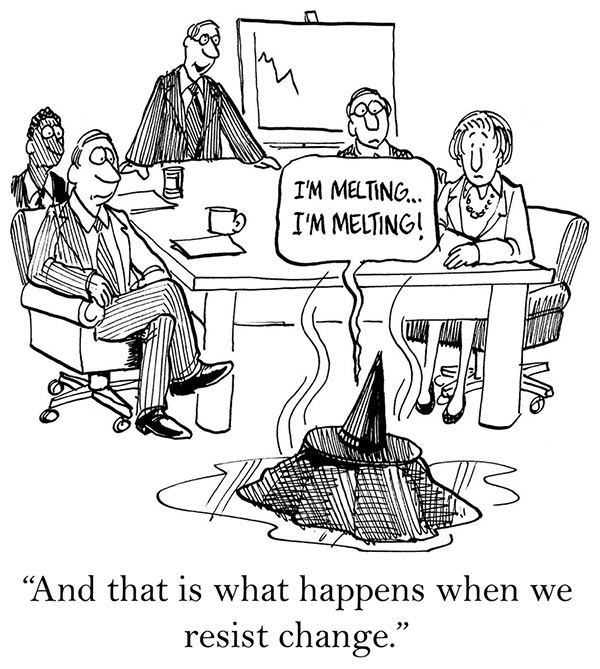
marketing-strategy-cartoon

We are all aware of the benefits of using social media for marketing. That’s why so many companies are using it. But what would happen if you combined social media and print into one killer marketing strategy?

Message

Print

If you do it right, print can be very powerful. You have a variety of options to choose from, including brochures, flyers, business cards, postcards, etc., so the possibilities are endless when trying to reach the right audience.

One of the greatest benefits of using print and direct mail is that your materials are put directly into the hands of the people you are targeting. Assuming that you have done your research and have a clean mailing list, those people are probably going to appreciate your effort.

Social Media

There really is an art to connecting with the right audience on social media. Not that this isn’t the case with print, but you can’t always reach everyone via social. Some people have private profiles or abandon their profiles altogether. You can’t send a random person private messages to buy so-and-so product. That is just ridiculous. No one is going to talk to you if you try to sell them something randomly. People are on these networks for fun, not to be targeted by marketers.

The best part about using social with print, though, is that after someone receives your flyers, mailers, or whatever you sent, you can connect with that person via social and ask them how their day is going. Maybe you do some research, and find out that they like home décor and you send them a link to a great Do-It-Yourself décor site. This way, you are on their mind even after they’ve set your printable aside. They might even dig out your flyer from the garbage because you are making a serious effort to build a relationship with them. That is what people like, good relationships. Social media combined with print gives you a second chance to make that happen.

Emotion

Print

So many people seem to think that print is going to disappear, but if you really think about it, print is one of the most powerful marketing tactics available. People still like the feeling of textured paper or the gloss coating given to it. They also enjoy getting mail that isn’t just bills. That’s why people get subscriptions like Quartly Co. They want to receive something fun in the mail.

Print marketing leaves a tangible object for that person to remember you by. They might set it off to the side and find it two weeks later when their boss is yelling because their sales are down 20% and they need to make something happen. They might think, hey, this marketing company sent me a flyer a few weeks ago. Maybe we should set up a meeting? Great idea. Right there, you’ve planted the seed.

You can’t get that with social media alone.

Social Media

Maybe that company does need some assistance to increase their sales and, just maybe, their boss agrees to takes a look at your flyer and learn more about you. They are going to do what everyone does when they’re looking for information. They research. And where might they do that? Of course, through their preferred search engine, but also on social media, because your networks will (ideally) show up in the search results. They are going to look at your relationships with your followers, what kind of information you share, and try to figure out how on earth you can help them. When they see the connections you’ve made through conversation and the impressive blog posts you’ve written, they will feel connected to you as well. They may even “Like” you.

Value

Print

There is something unique about print. It has a value that digital pieces just don’t encompass because it costs money. You wouldn’t take the energy or put the money into printing something that doesn’t have value, right? Not in this day and age. Everything is digital. Why would you print something on paper and waste a stamp or two to mail it out when you can e-mail it, it will be there in 10 seconds, and it’s free?

Because it is worth the time and the money.

When you print something, value is automatically associated with it. When that printed piece is received, people are likely to take a second out of their day to read it. Most people don’t get exciting mail anymore. They get coupon books, magazines that they’ve already read on their tablets, and maybe a few credit card offers. Joy.

The person who received your envelope will be surprised to see something in the mail that has value. Surprises = good memories.

Social Media

Unfortunately, when someone reads through their newsfeed on a social network, they can skip over every single one of your posts. But if they received your printable in the mail and then happen to see one of your posts on social media, it will stand out, and they will be more likely to interact with you. That’s a relationship builder!

In time, you will be able to get that person to converse with you on a regular basis. When you get to that point, you can quickly build a sustainable one-on-one relationship. In our digital world, more and more companies are requiring that their employees have a social media account specifically to interact with clients and potential clients. That work account was set up with the intention of building relationships, so it makes finding and connecting with that person much easier. It’s like magic! You can’t accomplish that with a print strategy.

Many companies limit themselves to a digital marketing strategy because it’s what all the cool kids are doing. All of the big companies are getting more exposure because of social media, so that’s what I should do, too. Maybe some companies are flourishing on social, but a little bit of thinking outside of the box will get you a long way. No one ever succeeded without taking risks, right? So, dig up the direct mail campaign idea that you canned a few years ago because “no one is doing it anymore”, and think about how that, paired with social media, can strengthen your marketing strategy.

About the Author

Megan-Pritts-inbound-marketing-specialist

Megan serves as the SEO and Social Media Strategist at JP Enterprises, a full-service marketing agency. She graduated with a B.A. in Art and started out as a graphic designer. Her artistic background inspires her to think creatively and gives her an edge in the world of online marketing. In her spare time she enjoys DIY projects, reading, and yoga.

You can find Megan on G+ and LinkedIn and @MSMondays on Twitter
7 Things Not to Say to Your Printer Part 4: Aren’t All Printing Companies the Same?

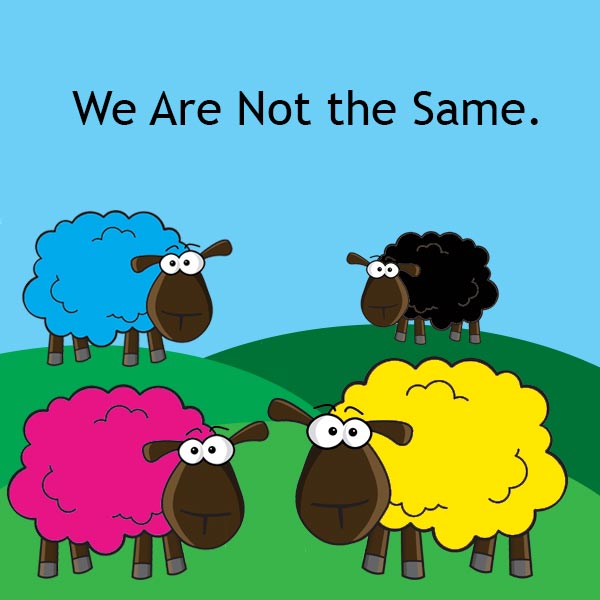
Printers-Are-Not-CMYK-Sheep

Now that you’ve had a chance to get back to your routine after the holidays, it’s time to get down to business. Welcome to the 4th installment of our series 7 Things Not to Say to Your Printer!

For those of you who are just joining us, this blogging exercise tackles your tough questions to help ease the pain of your future print projects. So far we’ve discussed how design impacts your ROI, color issues, and image resolution. Today we’re going to talk about a problem you didn’t know existed—making comparisons between printers.

You don’t like it when customers talk about you in relation to your competitors, and we’re no different in that respect. Still, I’m not bringing this to your attention because we’re butthurt—it’s a BIG mistake to view all printers in monochrome because then you can’t see our true colors. And this egregious error can take a chunk out of your wallet with reprinting costs.

But My Other Printer Did It This Way…

Look, we know you’ve been seeing other printers. We’re ok with having an open relationship with you, as long as you respect the boundaries. As I said in the intro, it’s in your best interest to focus on us when you’re working with us as opposed to those side printers you’ve been messing around with. Let me explain what I mean through an unfortunate example.

One day I walked into Alex’s (our manager) office to ask him a question. He signaled to wait as he was on the phone with a customer. I only heard 1 side of the conversation, yet I quickly understood what was going on. An irate customer called about her business cards; she insisted that we messed up her file. Alex calmly explained that we don’t modify files without notifying clients, and asked her if she downloaded our product template. His question made her fly off the handle—she insisted that her designer used our template to create her artwork, and that’s why she was furious with us.

Only her designer didn’t use our template.

I watched as Alex opened her file and uncovered the first layer in Illustrator. Sure enough, he discovered a branded guide from a well-known competitor. The measurements were not the same as ours, hence the ranting and raving. Of course, this whole problem could’ve been avoided by simply downloading the template straight from the source—us.

4 Ways Every Printing Company is Unique

Sadly, we run into the above dilemma on the regular. For this reason, I feel the need to explain why you shouldn’t expect all printers to do things the same way. Here are 4 things every printer does in its own special way:

Templates– This applies to pre-made designs you got off Graphic River as well as blank product templates. For the sake of your budget and deadlines, always make sure you download free templates from the printer who’ll be running the presses. You can find our template collection here.

Products and Services- Let me put it this way…have you ever walked into Walmart and asked about an item you saw in a Target ad? You wouldn’t do that because Walmart and Target carry different stuff. Sure, some of their inventories overlap. But you’d never expect them to be identical. Although printing companies may appear similar on the surface, I assure you, you won’t find another company exactly like ours or any of our competitors for that matter.

Procedures and Policies- Just as printers don’t all offer the same products; we each have our own sets of rules for everything from prepress checks to quality control. So it’s a good idea to ask our customer service staff about our order process instead of assuming that we do exactly what you’re used to from your side printer or ex-printer.

Capabilities and Specialties- while many printers aim for the one stop shop feel, others cater to smaller niche markets. For example, it pains me to say that we don’t do letterpress. We do offer a wide variety of business card options, including plastic cards, custom shapes, and mini cards. Since we have an in-house creative team, we can also design your cards for you. Not every printer doubles as a design studio, which illustrates my point.

Company Culture- In case you can’t tell by the content on this blog, we’re a little bit funky. We’re creative people, and we’re here to inspire your marketing campaigns. We’re also a multi-cultural company who celebrates diversity. Other printers don’t have the same shall we say personality, though. They prefer to keep things formal and corporate. That’s their gig, and we wish them lots of luck in their no fun zones.

5 Touching Canvas Print Ideas for Your Valentine

I’ve got some bad news to share with you. I’m not sure how to say it, so I’ll just blurt it out.

You won’t find the perfect Valentine’s Day gift in any store.

Bummer, right? Here you thought you could just swing by the mall (girls) or maybe hit up the guy on the street corner for a cheap bouquet and call it a day (guys). Of course you can take your chances with these time honored tactics; however, I have a much better solution that you and your sweetheart are going to love—canvas prints!

I’m speaking from personal experience because I gave my mom an artist’s canvas for Christmas. She went absolutely nuts over her present, so I’m confident you’ll get a similar reaction from your special someone. My mixed media design started out as a photo that I turned into a pop art piece with Photoshop. I’m mentioning my production methods because I want you to know that this product isn’t just for photographs. You can print any piece of art (analog or digital) to make your own custom pieces.

Designers, I’m talking to you. Canvas opens up a whole new world for your typographic posters, illustrations, and personal branding.

Quick Guide to Canvas Photo Printing

Before we get to the awesome examples, I want to make sure we go over the basics so you get the quality you’re after. Here are the 3 things you need to do before you send a file:

  1. Check your image resolution- Your artwork should be at least 300 dpi (hi res). That’s fancy print speak for “Instagram photos make our press machine cry.”
  2. Convert to CMYK- You may not be able to do this easily without graphics software. We can change your color mode for you, but please be aware that the image may look different afterwards.
  3. Give us Bleed, Baby- Every print product, including canvas, needs a proper bleed. In this case, we don’t need the bleed to cover the edges per say. We need it so there’s something to wrap around the mounted sides of your artwork.

5 Creative Canvas Design Ideas

Wedding Photo Collage

Wedding-Canvas-Photo-Print-Collage

You don’t have to use as many images as seen in this example. A single strong photo of the happy couple would be another option, especially if you don’t have access to Photoshop or other editing software.

Special Dates and Anniversaries

wedding-canvas-ideas-anniversary-dates

This print brings back fond memories of the day you met, got engaged, and sealed the deal.

Oh So Lovely Quotes

You-are-my-sunshine-typographic-quote-canvas-art

This sample shows that you don’t need a photo to make amazing wrapped wall art.

Romantic Roses and Floral Themes

Floral-Heart-Valentine's-Day-Artist-Canvas

I like flowers as much as the next girl, but it’s sad when they start to wilt. This will last forever, remind you of your wedding vows?

Old Love Letters

Canvas-printed-love-letters

The idea here would be to design your print using a love letter or other heartfelt message you’ve sent to each other in the past.

How to Order

Ready to order a Valentine’s Day canvas? Get started today!

(Note: turnaround times are a little slower for this product, so order early to have your gift in time for Feb. 14th!)

Marketers, Think of Direct Mail as an Offline Retargeting Tool

Direct-mail-marketing-is-offline-retargeting

Let me be blunt: I’m tired of defending print. Many of you know that I come from a digital background, so I’m guilty of poo-pooing print early in my career. I’ve seen the error of my ways; I no longer view print and digital as competing forces. They are complementary assets that together form a cohesive integrated marketing whole.

I still see a lot of disgruntled printers bemoaning the rise of online channels, which I believe puts them at stage 4 on the grief spectrum. But the depressed inkheads simply can’t compete with the sheer number of digital know-it-alls who dismiss print without even running a single campaign. It’s tough to deal with this kind of ignorance, yet I refuse to ignore the naysayers. Instead, I think I’ve found a way to reach them: talk to them in their own language. So from now on, when I talk to these folks about print, I plan to use internet analogies they can relate to.

Let’s test this method with a print staple, direct mail.

E-marketers: direct mail is just a form of offline retargeting. Get it?

What is Retargeting?

Let’s backtrack a bit for the printers among us. I realize you might be wondering what the heck is retargeting right about now. Allow me to explain.

Have you ever visited a website and left without buying anything only to see the same items pop up in banner ads that seem to follow your every click? That’s called retargeting, and it’s probably the most effective (and annoying) form of internet advertising. I won’t go into the specifics of how it works; for more information, check out this detailed explanation from AdRoll.

Remarketing gets a bad rep, much like so-called junk mail. Yet marketers continue to employ the tactic because retargeting works. And this form of borderline cyber stalking generates conversions through the same principal as many successful direct mail ventures i.e. double qualifying your traffic.

We all know that print communications receive better response rates when they’re sent to people who’ve opted in and/or already bought something from you before. That’s why catalogs are an excellent way to increase your website traffic and boost online sales. Most of the time, these mailers are sent to loyal customers and others who’ve at least expressed an interest in your business. When they see something in the mail from your brand, it feels familiar, and reminds them why they worked with you in the first place.

Their memories and your design entice consumers to read the message you send, which often leads them straight to the nearest computer. You can call this phenomenon whatever you like, but I believe retargeting would be the most accurate term.

3 Advantages of Offline Remarketing

I know I started off by saying that there shouldn’t be any competition among marketers. I stand by that statement, although I’m taking the liberty to point out a couple of ways direct mail improves on the online remarketing model:

    1. More Personalization – While there’s a degree of personalization going on with the banner ads (they usually include pictures of the last product page you visited) that’s not in the same league as variable data printing.
    2. Less Intrusive- I live and breathe online marketing, and I find the whole cookie thing unnerving. I don’t blame anyone for using display ads or trying to bring me back after I bounced out of their shopping cart. That said, I find all forms of print much friendlier. There’s nothing creepy about being able to simply throw away something I don’t want as opposed to being bombarded with ads every time I go online.
    3. Long Term- Retargeting cookies (thankfully) expire after a certain amount of time. A catalog, on the other hand, may stay on my coffee table for years. Enough said.

If you’re a digital marketer, and you’re ready to take a walk on the CMYK side, feel free to check out our mailing services. And be sure to tell all your friends that for #PrintWins for retargeting!

Hey, What Happened to Your Authorship?

Did you notice a decline in organic search traffic to your blog? If so, you’re not alone. I started seeing unusual stats in Google Analytics around Dec. 11th. It appeared as though social referrals outnumbered organic search visits for the first time.

Wow, I thought. This means we’re really connecting with our fans!

While it’s true that this blog is finally building some loyal readers (you ROCK!), there’s more to this story than meets the eye. As usual, analytic data only gives you part of the picture. You get to see what happened on your site, but figuring out why requires a bit of detective work.

I found my answer through a friend on Google Plus; she shared an article about what’s known as the Authorshipocalypse. It seems the Google Guardians took sweeping action to combat authorship spam on Dec. 9th. Now they can’t remove code from your site, but they can choose to ignore the markup and deny your rich snippet (the little picture next to your name in search results). The weird thing is that they’re not passing judgment against individual authors. They’re actually targeting domains based on reputation, which ends up hurting us writers indirectly. So your picture wasn’t really removed because you posted crappy blog posts. The image disappeared because Google feels the people you’re writing for aren’t cool enough to sit at the Established Author’s table.

Doesn’t Google Reward Writers for Quality Content?

Well, they say they do.

When Google rolled out Authorship and introduced the concept of AuthorRank, I cheered them on. As a writer, I love being able to build trust with readers and grow my personal brand in the process. In fact, I joined Google Plus for the sole purpose of advancing my writing career. I’ve seen the impact of the rich snippet on click through rates (CTRs), and that little thumbnail undoubtedly helped our company gain ground in this competitive online printing market.

I’m glad I joined G+ because I’ve met tons of amazing people on the site, but I definitely feel cheated. I never thought I’d be looked down upon for things that are totally beyond my control, namely every other site on earth’s link profile. I’ve been very selective about who I write for in the past, but I guess we’ll all have to be super careful in the future. I’m talking review OpenSiteExplorer before agreeing to guest post careful.

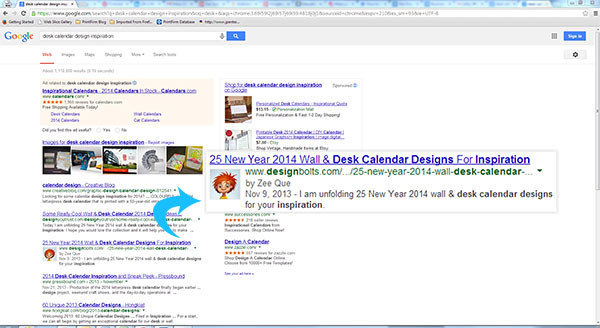
Of course Google claims the December penalties reinforce their commitment to serving up the best quality content to users. That must be why I got the following results for a search about calendars:

Authorship-spam-after-Google-spam-sweep

Before anyone asks, the image clearly shows I’m not logged in to Google Plus (that’s an incognito window). There’s no personalization impacting the results whatsoever.

By now you’re probably thinking, ok, so the writer uses a cartoon avatar instead of a real picture. What about the article, though? Surely this must be a well written, useful post!

Not even close.

Feel free to check the article out for yourself here. Spoiler alert: Before you get to the 100 words or so of poorly written copy, you’ll have to scroll down to avoid the giant Zip Extractor ad. From there you can scroll through way too many big images that take forever to load without so much as a brief description as to why you’d want to see them from this highly credible author. Oh, don’t forget to click on the Fiverr ad, another obvious indicator of a credible design resource site.

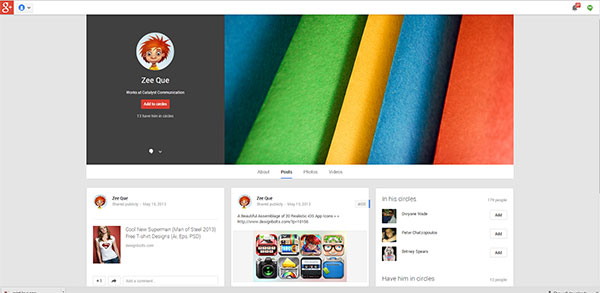
All right, one piece of thin content doesn’t necessarily mean we’re dealing with an amateur. Our animated friend must have other signals that indicate elite status. Perhaps the G+ profile page will reveal Google’s rationale:

Fake-Google-Plus-Profile-with-Author-markup-in-search-results

Hmmm…13 people have “him” in their circles, and “he” hasn’t posted anything other than his own links in all of 3 posts. The last post says “shared publicly May 15, 2013,” which means the elusive author doesn’t even bother to spray links on the site anymore. But if you visit the Design Bolts G+ business page, you’ll see zero engagement…aside from 1 avid fan who happens to use the same irritating avi identified as “Zee Que” in the rich snippet!

Good call, Google. This profile serves as a shining example of your mission to rid the web of rubbish.

What to Do if Your Site Got Hit

I wish I had answers for you.

I’ve been preaching the Gospel of Authorship since Oct. 2012. I hope one day Google will be able to make legitimate decisions about specific writers; conclusions that reflect our individual reputations as opposed to the number of backlinks pointing to domains where our content exists.

Until then, we have no choice but to keep writing. And prove Google’s negative perceptions about our employers wrong with every keystroke.

A Year’s Worth of Important Posts by Special People

Thank-You-guest-bloggers
Image Source

We’re back, and ready to rock 2014! But I wouldn’t feel right about moving forward without acknowledging all the awesome people who contributed to this blog in 2013. Before I got here, this blog didn’t have any guest posters, interviews, etc. I vowed to change that because I think every blog benefits from a fresh perspective or a different point of view.

Over the holiday there was a really cool hashtag on Twitter I abused on New Years Eve that seems appropriate here as well: #peoplewhomademy2013. I started this year off as a total noobie in the printing industry, and I’m forever grateful for the friends I’ve made along the way. I don’t want to leave anybody out, so I’m including the folks I interviewed as guest authors, too. After all, they did most of the work, taking the time to provide detailed, insightful answers to my questions.

8 Awesome Articles From Our Friends

Business Cards: How to Improve Your Bottom Line for Pennies a Day

A creative narrative written by Thomas Sullivan, an online research and copywriting expert. I know Thomas from a professional writing group, and he blew me away with this awesome example of storytelling about the importance of investing in business cards. Thomas was the first person to guest post on this site, and I hope he’ll stop by again soon.

5 Tips to Help You Get the Logo of Your Dreams

Francesca StaAna and I used to work together at a company called AdMedia. I knew I could count of her for great content, and she didn’t let me down. Francesca wrote a helpful post for small business owners about the logo design process. Yes, I said process, and so did she. Communication is a huge part of design, and I thank her for pointing out this often overlooked detail.

Top 5 LinkedIn Tips for Small Business Owners

To this day, this is one of the most popular posts ever on our site. I know Tasia from the same writing group where I met Thomas, and she wrote a very practical guide to LinkedIn geared towards new users in the small biz sector. Her post includes actionable tips with each point, and I’m not ashamed to say I adopted this tactic for my own writing. Tasia’s post ended up receiving a link on the Intuit Small Business blog—quite an honor!

Designing Tips for Creating Social Media Graphics

Visuals are a huge part of social media, especially on newer platforms (Pinterest, Instagram, etc.). Mandy Edwards knows this because she runs her own social media marketing agency. I met Mandy through Facebook at a previous job, and we’ve managed to stay in touch without ever meeting in person. Her no nonsense approach shines in this article and on her social profiles. I highly recommend following ME Marketing Services for lots of free online marketing advice.

Foldable Lead Generators: Design Tips Behind Successful Brochures

Another of our most popular posts came from Jillian Hailey, a designer and PR specialist. I met Jillian in a design group on LinkedIn, where she shared a blog post she wrote about printing her portfolio for a networking event. I loved her approach and enthusiasm for print marketing. She wrote an article with an amazing title that makes you see brochures as powerful tools with calls to action. Her post caught the attention of the folks at the Xerox digital printing blog, which speaks highly of her ability to draw in readers with a strong hook.

Tracking the ROI of Direct Mail and Print Advertising

Rob Lons is another cool cat I met in the social sphere, and he provided an exceptionally entertaining as well as informative post that strikes the core of advertising efforts: ROI. As printers, we get a lot of questions about campaign tracking and the return on direct mail marketing investments in particular. Since traditional direct mail isn’t as affordable as EDDM, the money questions are totally understandable. Rob showed everyone how to track print campaigns like a pro; I wish every client would read this post!

Why Print Matters and How It Can Impact Your Business, Today

Speaking of ROI, who better to explain Print’s role in the marketing equation than my friend and Xerox Digital Printing expert Bill Michael? Bill and I also met on LinkedIn, and he actually wrote 2 prolific posts for us this year. This first post includes an infographic we designed to back up Bill’s assessment of the power of print! We’re a little biased, but I think these numbers speak for themselves. You can read Bill’s second post, a New Year’s Resolution for Your Business when you’re done with the first one.

Ink on Paper- The Litho Process Explained

As you can see, many of our guest authors focused on marketing. This post by my friend John Prothero could only have been written by someone with his level of technical expertise. John schooled me and everyone else about how ink, chemistry, printing plates, and rubber blankets work together to bring your designs to life!

5 Sweet Interviews

Small Business Saturday Success Story

I wrote about Small Business Saturday several times, and I tried to find a business to profile to promote the cause. I ended up meeting Lisa Higby LeFevre on Mightybell, and she agreed to share her story to inspire other business owners. Lisa’s words will change the way you use social media and your attitude towards collaborating with other entrepreneurs. More than anything, she embodies the spirit of the #shopsmall movement. I’m proud to call her a friend.

Tales of Artistry: Interview with Illustrator Daryl Slaton

We’ve done a few sponsored giveaways in the past, but this one was special because it gave me a chance to talk to an accomplished artist. I met Daryl on Twitter through his community manager, Tina Wolfe. His work knocked my socks off, and that’s saying a lot because impressing me ain’t easy. Daryl talked about important issues for designers, such as commercial licensing for his work.

Patrick Hedgecoth Designer Interview

Patrick happens to be a client of ours I found on Google Plus. He was among the first people I met on that site, and he turned out to be a quality human being all around. He’s a wonderful father and a talented designer. Read the interview and you’ll notice that he’s got a rare way with words, a skill that’s often lacking in visual creatives. He’s already committed to writing another guest blog, so this won’t be the last you’ll see of him.

Cuong Tran Animator Extraordinaire

This wasn’t an interview per say…I tried to give some of our cool clients a place in the spotlight on our blog, and it didn’t work out as well as I hoped. On the plus side, I did get to write this piece on the exceptionally gifted Cuong Tan, a client of ours who’s also become a friend. Tran’s just beginning his career, and I think you’ll agree that he’s going to go far!

Andrew Conweezie, Underground Hip Hop Artist

Last, but certainly not least, the homie Andrew Conweezie! This multi-talented musician/designer was kind enough to post about his trading card order on our Facebook page. As soon as I caught a glimpse of the dopeness, I jumped at the chance to promote his work. Conweezie’s been a regular fixture around our social communities; he even turned one of his Facebook comments into a rad quote image! We can’t wait to see what Conweezie’s going to bring in 2014!

Our 13 Most Popular Blog Posts of 2013

Happy-New-Year-From-PrintFirm

Hello and welcome to our obligatory end of the year article roundup! This blog changed a lot when I took the reins, and I like to think the experience turned out positive for everyone involved. Before I get to the list, I want to share what I learned about blogging this year from YOU, our readers.

#1) Keyword content sucks – I never tried to cram as many keywords as possible into my copy for obvious reasons. But when I look back at the material I produced when I got hired back in February, it’s clear that I was putting too much emphasis on keywords. One of the main indicators would be my downright putrid post titles. I come from an SEO background, so I always viewed titles as an awesome place to put primary and secondary keyword phrases. That’s all well and good, so long as you’re able to do so with style. It took a while for this to sink in, and I’ll bet you’re equally happy I finally got a clue. The keyword formula is fine for our ecommerce site; the blog should be treated with great care because it’s in a totally different ballgame.

#2) Long form content rocks- I used to be deathly afraid of posting more than 500 words. I assumed that no one reads my writing anyway, and that longer posts would surely repel any actual users. Then Google decided to encourage authors to post long form content. This got me thinking about my length aversion and inspired me to give longer articles a try. Challenge accepted, and the response on your end has been spectacular. I can see in Analytics that you guys are staying on the pages long enough to absorb the information. Many of you decided to return to the site on a regular basis to consume or share the extended articles. On a personal level, I feel as though you guys actually care what I have to say, which means more to me than you’ll ever know.

#3) It’s ok to be ME! – We copywriters all end up ghost writing at some point, which requires 3rd person POV i.e. no personal voice. And my college professors drilled it in my head that there’s no room for the “I” in academic essays. While their advice helped me excel academically, impersonal copy just doesn’t work on the web. So I slowly started to move away from the standoffish tone, and you actually accepted my voice. Now I feel free to express MY thoughts on print, marketing, design, and small business advocacy. It’s a relief to know that you’re cool with my quirks, but I am still afraid that you’ll eventually get sick of me. I’m hoping to get more guest bloggers to keep things fresh around here next year.

Top 13 PrintFirm Posts

Here are our favorite blog posts in 2013 by month :

March: Vocus and PrintFirm: A Twitter Tale

The good people at Vocus sent me a book simply for tweeting them. We currently use their PRWeb service for press release distribution, so there’s your direct mail ROI. Anyway, this post is key because it’s literally a personal story. Vocus made an intimate gesture, so I held my breath and responded in kind. I guess you could say this post started it all.

April: Trade Show Banners and Marketing Psychology

I came across this infographic, and built a post around it for a couple of reasons. Many of our clients attend trade shows, so I thought this would be useful for people preparing print marketing materials. At the same time, I wanted to demonstrate the need to be strategic about marketing communications. Roll up banners are no different than direct mailers in this respect. They should both use design to send the right message about your brand.

May: Originality in Marketing: Business Leadership Lessons from Cypress Hill

This post also incorporated a personal anecdote, although I didn’t reveal the true source of my inspiration at that time. I discovered a couple of competitors were ripping off our blog posts, and this was my passive-aggressive response to them. Since they must’ve been following our blog, I knew they’d get the message without my having to call them out. They didn’t stop, but that’s ok—it means we’re still on top of the creative content game.

June: PrintFirm Joins Print Media Centr

As soon as I discovered the weekly #printchat session on Twitter, I dreamed of guest blogging on the Print Media Centr. After I landed the guest post on the Xerox Digital Printing blog (thanks to Bill Michael), Debrah from PMC approached me to become a contributor. So the link above more or less just links to my first PMC post. My print geek confession did earn a lot of shares on the PMC site, and it lead to a solid relationship between Debrah and I. I currently write at least 2 blogs per month for PMC.

July: The Declaration of Independence: A Piece of Printing History

They say that a big part of creativity lies in making connections. For the 4th of July, I did some research to show the way print media impacted the American Revolution. The subject matter naturally appealed to fellow printers, and I finally got a chance to indulge my political passions at work. Win-win.

August: How to Use Social Media Psychology for Content Marketing

I designed a tongue in cheek infographic on my own time on a lazy Sunday afternoon. I decided to post about it because I think the underlying message is super important for businesses. Social media users are NOT all the same across sites, which means you need to tailor your content to suit the user base. I must’ve struck a chord because this graphic keeps popping up on the web. Not bad for a half-baked Photoshop exercise.

PrintFirm Honored with NAPL Marketing Plus Award

August gets 2 posts since that’s when we won our Marketing Plus Award from the National Association of Printing Leadership (NAPL). No, this post wasn’t too popular with our fans. It just means the world to our team.

September: Print 13 Recap

The Print 13 Printing and Graphics Expo gave our CEO Nick and Operations Manager Alex a chance to meet some of the coolest people we know online in person. I’m still overcome with envy, although I won’t stand in the way of re-sharing memories from this most excellent occasion.

October: Prepare for National Print Day 2013

Since National Print Day no longer exists (we’ll be celebrating the first ever International Print Day in 2014), this one’s for posterity. Besides, the post remains relevant because all the ideas on how to celebrate NPD can easily be applied to IPD as well.

10 Last Minute Halloween 2013 Marketing Ideas

I did a handful of posts featuring small biz marketing strategies and advice. For whatever reason, the Halloween post generated a lot of reader comments. A couple of people mentioned that they wished I’d written the post sooner so they’d have more time to actually implement the suggestions. The fact that you guys wanted to give this stuff a try makes the post worth mentioning again. Hey, there’s always next Halloween, right?

November: Are you getting ready for Small Business Saturday 2013?

I’m a huge supporter of the #shopsmall movement. Most of our clients own small to medium sized businesses; in fact, you’re probably a business owner yourself. Despite the questionable practices from Facebook, I believe this represents an awesome opportunity for local businesses to play up their strengths against corporate competitors.

Exclusive Interview with Leading Designer Paul Biedermann

Not only is Paul Biedermann one of my professional mentors, he also tries to bridge the communications gap between designers and clients. Paul’s mission is to help everyone in the business world from entrepreneurs to marketers understand the importance of design. This interview covers such a wide range of topics that I consider it a must read.

December: 7 Things Not to Say to Your Printer Part 3: I Don’t Need a Graphic Designer

We’ve gotten a lot of good feedback on blog posts in November and December, but this educational series is probably the most valuable to our customers. I am trying to answer common questions about professional printing using this overarching theme of thing not to say. This specific post really resonated with the design community because it explains the relationship between design and ROI.

Reflections

And that’s a year’s worth of blogging, in a nutshell. Now I want to hear from YOU! What were your favorite posts? What do you want to see more of? Is there anything you’d rather not see in 2014? Let me know in the comments below.

Happy New Year from PrintFirm.com!

Why Did You Stop Sending Thank You Notes?

The-Lost-Art-of-Thank-You-Notes

In case you haven’t heard, December 26th is National Thank You Note day! In honor of the occasion, I thought I’d share a conversation that took place in the philosophical section of my living room couch.

Last week I received a Christmas card from my mom in the mail. My husband brought it into my apartment, and I eagerly opened the pretty envelope even though I already knew what I’d find inside. I handed the card to my friend and fellow millennial, expecting to hear her groan about this old fashioned practice. To my surprise, she said, “How pretty! Let’s put it next to your Christmas tree.”

My friend’s enthusiasm sparked my curiosity because she’s definitely not a print geek like me. She’s a nurse who has no interest in design or anything else of that nature. So her excitement caught me totally off guard. I asked, “Do you like getting greeting cards in the mail?”

“Yeah,” she replied. “They’re cool.”

“Me, too,” I said. And then I realized that her reaction really isn’t uncommon at all. In fact, I’ve never seen anybody have a negative reaction to a card. That got the gears in my head turning, and I thought about how many people put Christmas cards on display in their homes and offices. I wondered if my friend noticed this tendency as well.

“Isn’t it funny how people always want to show off Christmas cards?”

My friend knew exactly what I was talking about: “Oh totally. That’s what I do with them. Everyone puts them up.”

“That’s true. Hmmm…if everyone loves getting cards, and hanging them up, why don’t people send them anymore?,” I wondered.

A Thoughtless Generation?

To answer my question, I needed to look no further than the mirror. I admit that I can’t remember the last time I mailed out a Christmas card. Well, maybe I can. I believe the last piece of holiday snail mail I sent went to my Great Uncle who happens to be 97 year old.

Before you cast judgment, I assure you, my mother certainly didn’t raise me this way. She spent hours trying to get my brother & I to mail cards along with thank you notes to our relatives. Every birthday and Christmas, she’d put a stack of cards on the kitchen table for us to sign. She’d beg us to get them out in a timely fashion, but we’d usually spend about a month grumbling about the task before we got around to it. As an adult, I’ve never bothered to send cards. I operated on the assumption that verbal expressions of gratitude along with email would be enough to get the point across.

Boy was I wrong. I mean, who would want to show off a form email to their Christmas guests?

Despite the fact that I never wanted to send them, I always enjoyed receiving greeting cards growing up; we used to tape them up around the entry way to our house so everyone would see them when they dropped by. And it never occurred to me that other people would feel the same joy if I bothered to send them a printed note of appreciation. Thankfully, it’s not too late to redeem myself in 2013.

Thank You Notes are Throwbacks!

My friend and I decided we should bring back greeting cards—what better day than National Thank You Note Day to put our retro plan into action! Instead of thinking of mail as a form of antiquated communications, let’s embrace the throwback aspect of offline channels. Us Millenials are known for our obsession with vintage stuff, which means greeting cards should be super popular. It doesn’t get more old school than ink and paper.

I hope you’ll join me in my mission to promote real human interaction this holiday season. Let’s make 2014 as personal as possible with print!

Why Marketers Can’t Trust Instagram aka Facebook

Should Marketers Trust Instagram

It’s the most wonderful time of the year…for meaningless marketing predictions. Every December bloggers pour themselves cups of spiked eggnog, and play fortuneteller. They gush over their preferred platforms and make doomsday predictions loosely based on data. I’m as guilty as the next blabbermouth; I posted last week about moving away from Facebook in 2014.

Today I’d like to revisit this topic, although I’m not going to pretend to tell the future. I’m coming to you as a friend and fellow marketer because I don’t want you to repeat the same social media mistakes. By that I mean putting an ounce of trust in Facebook.

Don’t Fall into the Instagram Quicksand

If you’ve been following this blog, it probably seem as though I’m beating a dead horse here. But I’m not referring to Facebook itself; I’m talking about its popular app property, Instagram. In the wake of all the Facebook nonsense, I’ve heard a lot of people suggest IG as an alternative way to reach your fans. That’s about as logical as trying to extinguish a fire with lighter fluid. As I said in this funny social media infographic, there seems to be some form of collective denial going on here. Everyone consciously realizes that Facebook owns Instagram, yet they still view them as separate entities. That’s fine for teenagers who want to escape from their parents, but it makes zero sense from a business standpoint.

The fine folks at Streamfeed created a petition to convince Facebook to change its greedy ways. I wish them the best, although I admit I haven’t signed the petition because I believe it’s a futile effort. Facebook clearly doesn’t care about its users or the brands who contribute to its daily traffic stats. So why should Instagram be any different? Instagram is just another way for Facebook to pad its pockets— they just haven’t figured out how to do it with the least amount of user backlash.

So far they’ve introduced “sponsored” posts (aka ads) to 4 major brands with promising early results. The strong numbers seem positive, until you realize that the brands in question are huge corporations who already had large followings on the platform. Replicating these results probably isn’t realistic for your small business. And since you can’t post links to your website, good luck even getting referral traffic to your blog.

Is Instagram Worth Your Time?

I joined Instagram about 2 weeks ago as a personal user (I own a Windows phone, so the app wasn’t available to me until then. The current product is still in Beta mode). I wanted to see what the hype is about, and figure out if it would be worthwhile to invest in an IG content strategy for PrintFirm. I do see some potential for us and other printers to increase consumer interest in our brands, but that’s about it. We’re in the B2B market, and our main demographic is well over the age of the average IG user.

Perhaps you’re in a different position. Maybe your target market fits the IG base to a tea. Does that mean you should put a lot of effort into your building your presence there? While I would recommend using the channel, this question brings me back to my original point. Facebook already turned their back on your business. They fooled you once, and that’s completely understandable. But if you let them fool you again, I really don’t want to hear any complaints about it. And feel free to hum along to this song…

http://www.youtube.com/watch?v=SdOEindANdY

New Year’s Resolution: Maintaining (and Leveraging) a Customer Database

Guest Post by Bill Michael, Xerox Digital Printing Specialist

3-steps-to-higher-profits-in-2014-by-Bill-Michael

As we prepare to tie the bow on 2013, we anxiously look ahead to what we hope will be a very promising 2014. While the new year brings a sense of unknown, and with the unknown comes fear…it also brings hope, optimism, and ambition. If you are like 45% of Americans, you will make a New Year’s resolution this year. Most will involve losing weight, getting organized, saving money or quitting smoking. And most, sadly, will not be maintained as the calendar flips to February.

So let’s try something here. In addition to making a New Year’s resolution for yourself, let’s also make one for your business. And let’s try our damndest to achieve it! And if I may make a recommendation, let’s focus our resolution on marketing communications that better reach, and engage, your customers.

In my last post, I spoke about the effectiveness of print as a marketing channel. To quickly recap, consumers are exposed to an enormous amount of marketing messages each day….over 5,000 to be exact. And while the inbox emails are piling up, the physical mail consumers are bringing in from the mailbox is dwindling.

98% of Americans check their mailboxes every day with roughly 80% of all physical mail getting opened. This helps to explain why printed direct mailers have an average response rate that is forty times higher than email.

What does this mean to you?

So let’s put this into context. What’s your business? Are you an academic institution recruiting incoming high school students? A local restaurant trying to reach new patrons? An auto dealer trying to clear your inventory? An IT solution company promoting your savvy technical know-how? Well, how would you like to attend a tradeshow where all of your customer’s attend, but none of your competitor’s do? As Joe Pulizzi explains, “that’s where we are with print today. All your customers are still getting mail, but they are getting less and less of it.” This is a great opportunity, but to truly take advantage you need to have some sort of customer database in place.

Personalization matters.

A study featured on Forbes earlier this year captured my attention, and I thought it was worth sharing. In it, 61% of US consumers said they feel more positive about a brand when marketing messages are personalized. In that same study, 44% said they are less responsive to non-personalized (think mass-marketing) messages. Also noteworthy: 53% are more likely to purchase when a brand uses personalization.

So if you’re keeping score at home, by leveraging personalization AND print communications, you are:

  • Competing for consumer attention in a channel that has fewer distractions,
  • Utilizing a medium which has been shown to achieve greater response rates, and
  • When tailored to the recipient with relevant content, are viewed favorably and are more likely to lead to purchasing decisions.

Doing this, however, starts with having a database in place. And just like a resolution to lose 15 pounds, nobody ever said improving your customer communications was easy! A resolution to maintain and leverage a database requires a strategic vision, commitment and, of course, a budget. Here are a few ways you can get started:

1. Know what to collect

Maybe you already have the foundational pieces to your database in place. If so, congratulations – you are well on your way! If you’re just starting out, it’s important to have a grasp of exactly what information you want to collect. This will prove to be critical as you start to create your customer communications and tailor them to the recipient.

Of course there is the obvious: You will need basic contact details (first name, last name, prefix, address, city, state, zip code, telephone number). But then there are the secondary and tertiary levels of detail that, when properly leveraged, can really make a difference capturing the attention of the recipient. This information may include the recipients’ business sector, past purchase history, birthday, date their product lease or warranty expires, income level…and even general interests or favorite sports. With this data at your disposal, the possibilities are nearly endless in terms of what type of printed communication you can create.

I know what you are thinking. How on earth am I supposed to get some of that information? How can I possibly know what my customers and prospects consider to be their favorite sport? Great question! Continue reading…

2. Know where to look

Knowing where to look to get the information is just as important as knowing what to collect! And by this, I mean a few different things. First of all, it’s important to note that creating a database does not necessarily have to be a time-exhaustive and manual process. Databases are becoming increasingly affordable, and depending on the level of detail and depth you are looking for, can be purchased for under one-hundred dollars. Obviously, as you start adding more demographics and qualifications, the database becomes more expensive…but this at least gives you a starting point.

If you are not interested in purchasing a database and would rather utilize a home-grown list, then continue reading and please pause to give yourself a pat on the back. While more challenging, you can find comfort in knowing your database will be relevant and likely contain contacts that have opted-in and confirmed they are interested in your products and services.

3. Building and Maintaining your database

There are plenty of places to look and ways to gather the information you need for your database. Here are some ideas to get you started:

a) This past May, an Open Data policy was signed to make data more readily available and to help fuel economic growth. While the information has always been available to some degree, this commitment aims to increase the volume and accessibility of the data, providing huge opportunities for your business at no cost. You can check out the full press release here, or visit the constantly-updating data.gov.

b) Conducting in-store or online surveys are a great way to collect consumer information. These can be done through various promotions where a consumer is incentivized to provide information (ie – free gifts or a percentage off their order). In fact, a 2013 study titled “Engaging with Digital Consumers” found that 45% of consumers were willing to trade information for incentives tailored to their shopping habits.

c) Customer loyalty programs are another great way to collect information, as they encourage relationship building and reward customer behavior while building a robust database of customer preferences and spending habits.

4. Think creatively

As I mentioned, the more robust your database – the more flexibility you have when creating a unique customer communication. But even a minimal database can be ultra-effective if leveraged properly. The key is thinking smartly and creatively! Here are a few examples of print campaigns that effectively leveraged databases – both big and small:

a. A local restaurant chain used a special birthday promotion to help them build a database and very effective marketing campaign. They offered $10 birthday discounts to 100,000 customers who filled out a birthday club registration card while dining at the restaurant. From this, a database was created and special birthday cards were printed and mailed to each of the card holders. To the delight of the restaurant, 41% of the cards were redeemed, which produced nearly $1.5 million dollars in sales. And since nobody enjoys eating alone, each birthday patron was accompanied by an average of 1.8 additional guests, who paid full price for their meals.

b. A car dealer created a highly-personalized print piece to boost vehicle trade-in sales, leveraging information on consumers’ recent purchase history. The front of the mailer included an image of your car model, complete with the right options, the right color and even your license plate number! Using an algorithm, the inside of the mailer featured three very attractive vehicle trade-in offers. The price points were computed based on the known trade-in value of your vehicle, taking into consideration its mileage and service history. This printed piece generated a 50% response rate, with 16-22% taking advantage of the trade-in opportunity.

c. A multi-location childcare company wanted to increase the number of families that entrusted them with their children, so they used readily available data to create a very smart, and effective, campaign. This childcare knew that parents typically prefer to use facilities within a few miles of their homes, so they specifically targeting families within a certain mileage radius of their locations. Two versions were created, one for families with children 0 to 4 years of age, and another version that targeted families with children aged 4 to 12. Based on the version as well as the gender of the child, the mailer was designed to include specific messaging and gender-appropriate imagery. All versions included a map showing the exact route the parents could take to get to the nearest childcare facility. By taking advantage of basic database information, this campaign generated a 2,200% ROI (based on new enrollment and an average childcare service length of four years). The opportunities through data and mapping personalization are quite extensive!

5. Engage the experts!

Database marketing is a challenging, yet rewarding venture that can yield tremendous business results when done properly. But keep in mind that you don’t have to go through this exercise alone! There are a wealth of print service providers and marketing agencies that have experience and expertise in these types of marketing communications. They can help you with your database needs, all while creating a strategic campaign designed to take advantage of your data and achieve your business objectives. Don’t be afraid to tap into the services of a professional to assist you!

About The Author

Bill Michael eMarketing ManagerBill Michael is an eMarketing Manager for Xerox Corporation. He received his Bachelors of Science in New Media Publishing from the School of Print Media at the Rochester Institute of Technology, and is currently pursuing his Masters of Science from RIT. When he isn’t at work or school, Bill enjoys running, basketball, football, table tennis, spending time with his fiancée and his energetic dog. Connect with Bill on LinkedIn.